Highlights
- Tracing and observability solve different problems. Agent tracing shows what happened in a single execution. AI agent observability shows whether the entire system is behaving reliably across many executions, tenants, and conversations.
- LangSmith is built for debugging. It excels at execution traces, prompt inspection, dataset experiments, and LangGraph workflow visibility, making it a strong choice for getting agents to production.
- Production AI fails through slow degradations, not crashes. Rising latency, retrieval drift, quality regressions, and tenant-specific failures only surface across many traces over time, not inside any single trace.
- Netra is built for production reliability. It combines tracing with continuous evaluation, multi-turn simulation, and tenant-aware monitoring in one operational workflow.
- Tenant-aware observability is first-class in Netra. Per-customer trace isolation, SLA monitoring, and cost attribution become critical the moment multiple customers share an agent platform.
- Multi-turn simulation catches what single-turn tests miss. Context drift, memory failures, persona instability, and workflow deviation usually appear after turn 10, not turn 1.
- The shift to track: moving from debugging individual agent runs to reliability engineering across the full system. That's the gap most AI teams discover after their first production deployment.
Why Modern AI Agents Need More Than Agent Tracing
Modern AI agents don't just generate text. They retrieve context, call APIs, coordinate workflows, and make runtime decisions autonomously. That makes them powerful, and significantly harder to operate reliably in production.
Most teams start with agent tracing, and that's the right first step. Tools like LangChain + LangSmith make it easier to understand what happened during an agent execution:
- which tools were called
- what context was retrieved
- where failures occurred
- and how workflows progressed
For debugging agent workflows, that visibility is essential. But production AI systems fail in ways tracing alone can't explain.
Short answer: Tracing explains what happened in one execution. AI agent observability explains whether the system is behaving reliably overall.
That's the shift this article is about, and it's where the difference between LangSmith-style tracing and Netra becomes visible.
What LangSmith Does Well (and Where It Stops)
LangGraph + LangSmith are strong choices for orchestrating and debugging agent workflows. LangSmith gives teams:
- execution traces
- prompt inspection
- workflow visibility
- dataset experiments
- debugging tooling around LangGraph agents
For many teams, that's enough to get agents into production.
But once systems become multi-tenant, long-running, and operationally critical, tracing UIs alone stop being sufficient, because production reliability requires continuous operational visibility, not just execution replay.
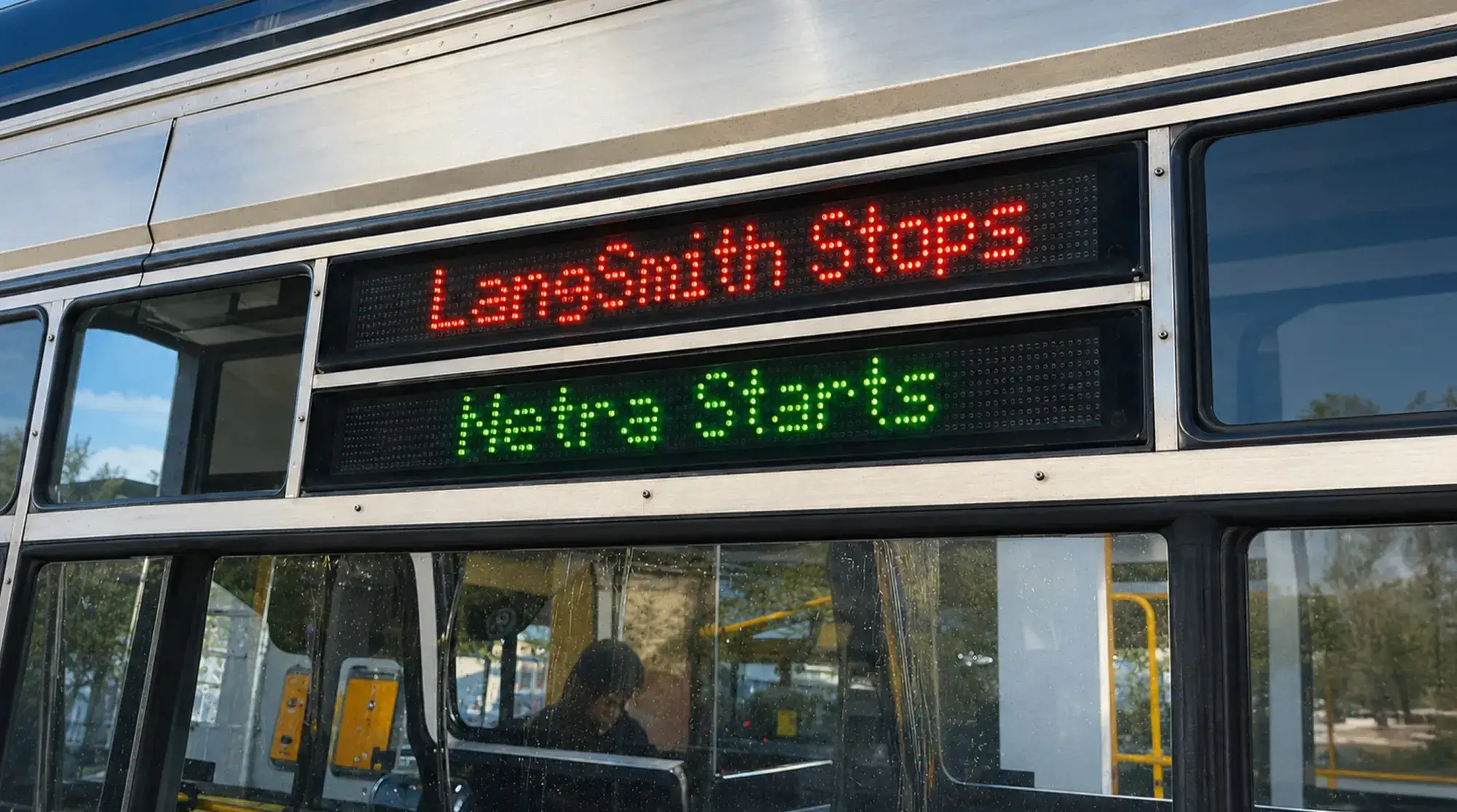
Key distinction: Tracing is a debugger. Observability is a control plane.
Where Production AI Systems Actually Break
Most production AI failures aren't catastrophic crashes. They're slow degradations:
- rising latency
- workflow instability
- context drift across long conversations
- memory inconsistency
- quality regressions after model or prompt updates
- escalating inference costs
These problems typically appear only across longer interactions or multi-agent coordination flows. A single trace won't expose them. You need system-level AI agent observability to answer questions like:
- Which workflows are degrading week over week?
- Which tenants are driving the most cost per request?
- Which agent paths fail most often?
- Did response quality regress after the last deployment?
- Are conversations drifting after turn 10?
That's an observability problem, not a tracing problem.
How Netra Approaches AI Agent Observability Differently
The agent observability space has grown quickly, with several adjacent tools each strong at a different layer. Netra approaches agent traceability as production infrastructure, combining tracing, evaluation, simulation, and tenant-aware observability into one operational workflow.
1.Tenant-aware observability
Most enterprise AI systems are shared infrastructure. Netra treats tenant tracking as a first-class primitive, letting teams isolate traces, monitor per-tenant SLAs, and attribute inference costs per customer. This becomes operationally critical the moment multiple customers run on the same agent platform.
2. Auto-evaluation on live traces
Tracing tells you what happened. Evaluation tells you whether the result was actually good. Netra automatically evaluates traces containing LLM calls for:
- coherence
- factual accuracy
- toxicity
This matters because most AI systems don't fail instantly. Reliability erodes gradually until users stop trusting the system.
3. Multi-turn simulation
Many agents look reliable in single-turn tests. Production failures usually appear later:
- context drift
- contradictory responses
- memory failures
- persona instability
- workflow deviation
Netra's simulation workflow focuses on multi-turn conversational behavior rather than isolated prompts. Validating turn 1 is not the same as validating a 20-turn workflow.
4. Semantic traces
Large agent systems suffer from trace readability problems. Netra structures traces semantically around concepts like workflow, agent, and task. It's a small detail that becomes important once systems scale beyond simple single-agent flows.
LangSmith vs Netra at a Glance

The Real Shift: From Debugging to Reliability Engineering
The important distinction:
Tracing explains failures after they happen. Observability helps teams prevent them.
That's the operational gap many AI teams discover after moving from demos into production. LangSmith is excellent for understanding agent execution. Netra is built for the next layer: operating autonomous AI systems reliably at scale.
As AI systems become more autonomous, that distinction matters more.
Frequently Asked Questions
What is AI agent observability?
AI agent observability is the continuous monitoring of autonomous AI systems across tracing, evaluation, cost, latency, and behavioral drift. Unlike agent tracing, which captures individual executions, observability surfaces system-level reliability patterns over time.
How is AI agent observability different from agent tracing?
Agent tracing records what happened in one agent run. AI agent observability aggregates traces, evaluates output quality, simulates multi-turn behavior, and attributes cost and failures per tenant, giving teams a continuous reliability signal instead of point-in-time replay.
What is a good LangSmith alternative for production AI agents?
Netra is positioned as a production-grade LangSmith alternative for teams running multi-tenant, long-running agent systems. It adds tenant-aware observability, auto-evaluation on live traces, and multi-turn simulation on top of agent tracing.
What's the difference between LangSmith and Netra?
LangSmith focuses on debugging LangGraph agent executions. Netra focuses on operating agents reliably in production by combining tracing with continuous evaluation, multi-turn simulation, and per-tenant monitoring.
Why isn't tracing enough for production AI agents?
Tracing exposes single executions, but production failures are usually slow degradations such as rising latency, retrieval drift, quality regressions, or tenant-specific failures. These patterns only become visible across many traces over time.
What is multi-turn simulation in agent testing?
Multi-turn simulation tests agent behavior across full conversations rather than single prompts. It catches context drift, contradictions, memory failures, and persona instability that single-turn tests miss.
What does tenant-aware observability mean?
Tenant-aware observability tracks every trace, cost event, and reliability metric with a tenant identifier as a first-class field, so platform teams can monitor per-customer SLAs, isolate noisy tenants, and attribute infrastructure cost accurately.
How do you evaluate LLM agent quality in production?
Production LLM evaluation scores live agent traces on dimensions like coherence, factual accuracy, and toxicity. Teams typically combine automated quality checks with ground-truth datasets and human review for high-stakes flows.
Ready to move from tracing to reliability?
If your team has outgrown trace-replay debugging and needs continuous AI agent observability for production systems, book a Netra demo or explore the platform.